
Launch companies › MaiaSpace
Welcome to our in-depth analysis of MaiaSpace, first published October 7th, 2026 (key facts highlighted in blue). Make sure to check out our mission statement and why we do what we do. Look at our New Space guide if you want explanations of terms and concepts used in our research. And follow us on X for updates.
🚀 Update from October 2026
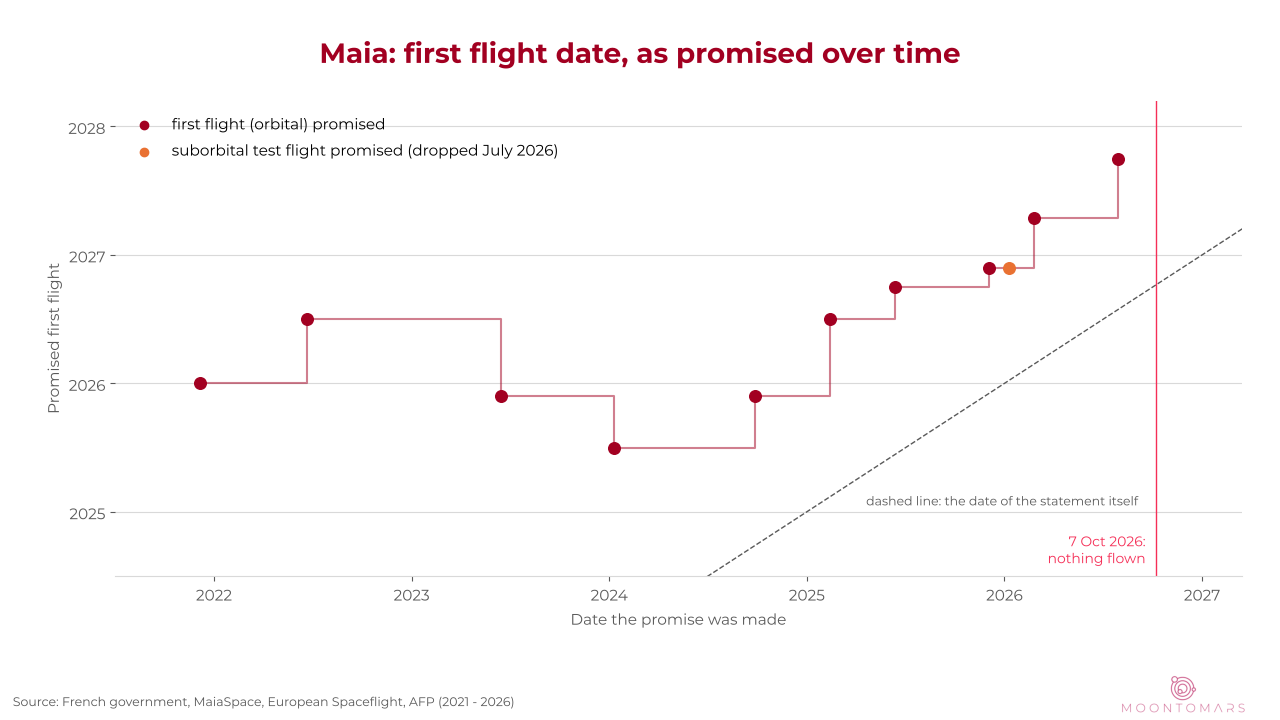
- No flight yet. Maia has not flown. The first flight, now an orbital attempt, is planned for the second half of 2027, after targets of the end of 2025, 2026 and April 2027.
- Owner. MaiaSpace belongs entirely to ArianeGroup, the Airbus and Safran joint venture that builds Ariane 6. No outside investor has joined, although the 2022 plan was to raise several hundred million euros privately.
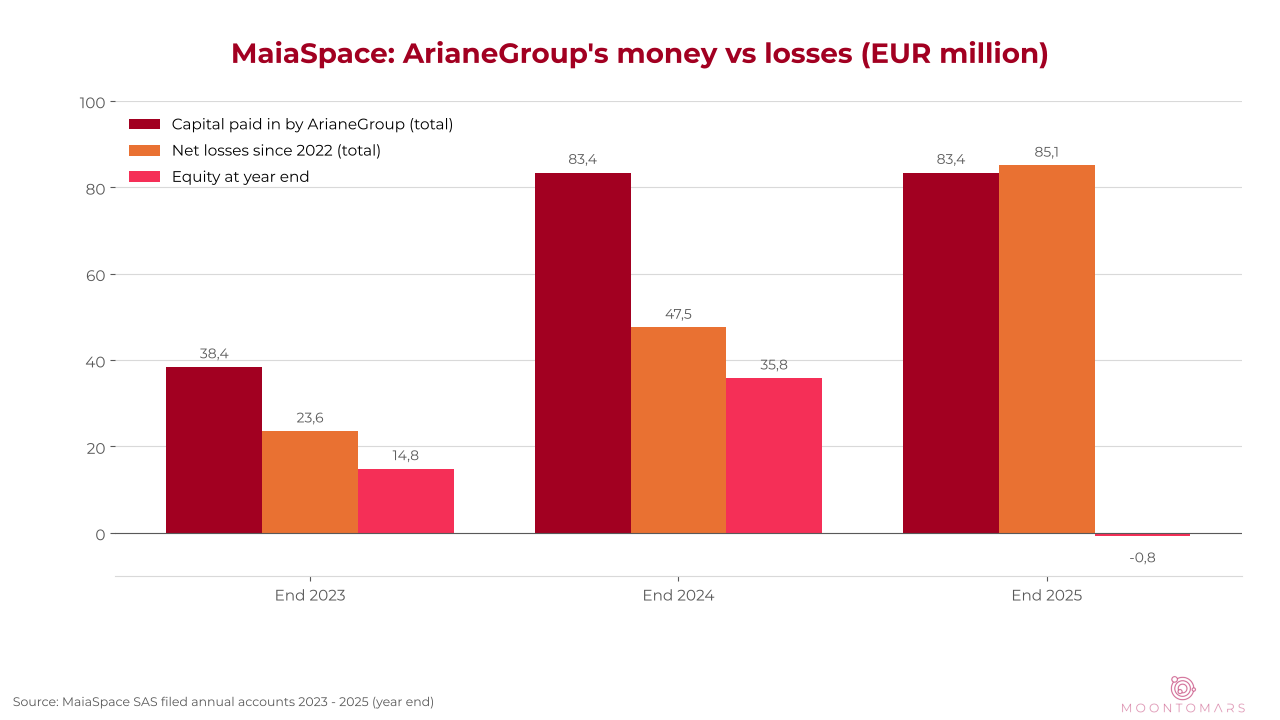
- Losses. Net losses reached EUR 85 million by the end of 2025, more than the EUR 83 million ArianeGroup had paid in, and equity turned negative. On 25 June 2026 ArianeGroup decided not to dissolve the company.
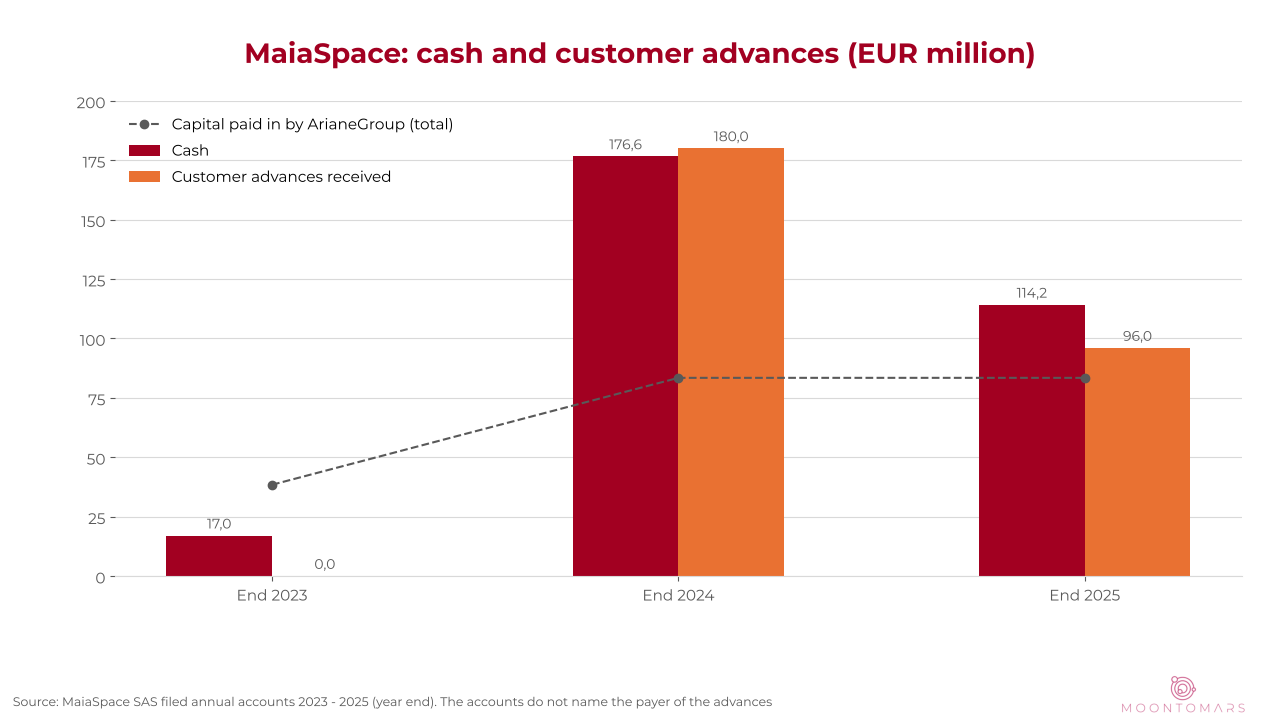
- Public money. France pledged EUR 179 million to MaiaSpace through ESA’s European Launcher Challenge, but the contract was still unsigned in early October 2026, while three rivals signed in August. The accounts show EUR 180 million of customer advances at the end of 2024, without naming the payer.
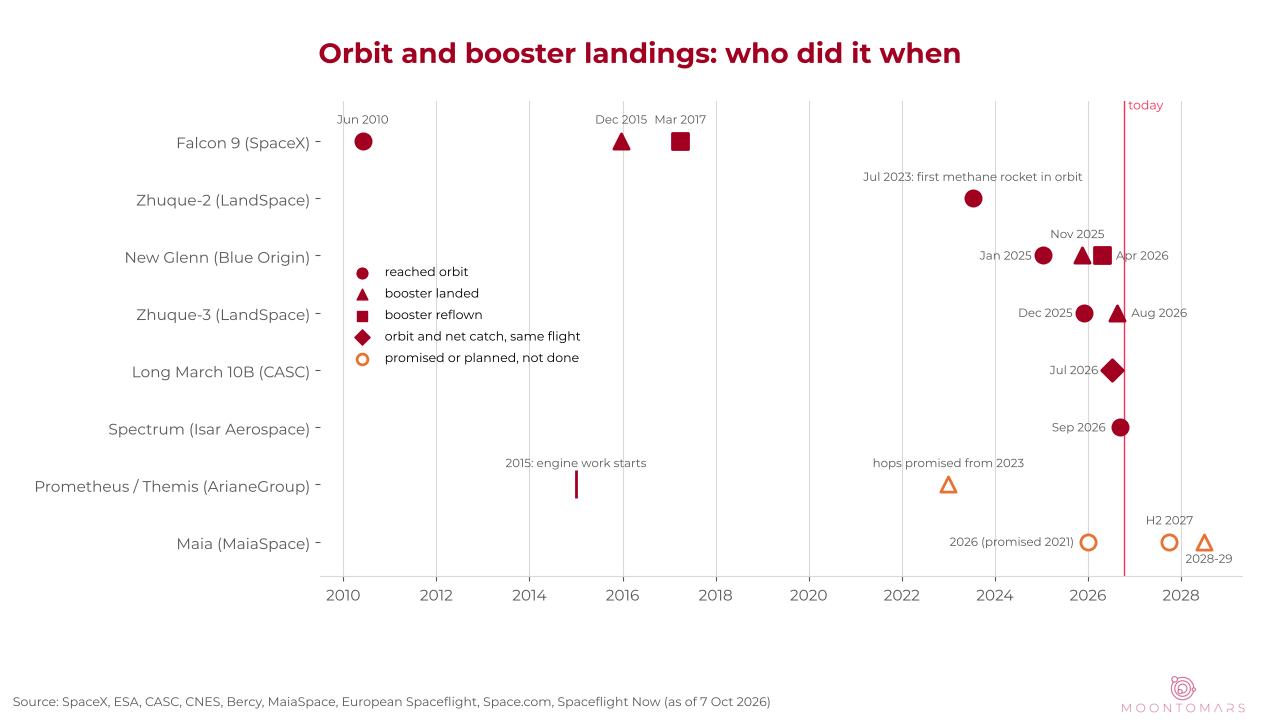
- Competition. China’s Zhuque-2 put a methane rocket with Maia’s expendable payload of 1.5 tonnes in orbit in July 2023. In 2026 China landed two boosters and Blue Origin reflew one, while Europe’s Themis hopper has not hopped.
- Company. Vernon, Normandy, more than 400 employees (company figure, September 2026), a rocket factory under construction since September 2026 and a launch pad in French Guiana.
MaiaSpace – ArianeGroup’s reusable rocket, sold as a startup
MaiaSpace is a French launch company building Maia, a two-stage rocket whose first stage is meant to land on a barge at sea and fly again. Before we continue you should know: MaiaSpace belongs entirely to ArianeGroup, the company that builds Ariane 6.
ArianeGroup set it up at the end of 2021 in a dormant shelf company and has presented it as a startup ever since, with agile methods, a young team and a promise of private money. Almost five years later the shareholder register holds one name, the losses have used up all of the capital, and the cash comes from customer advances and public contracts. Maia runs on Prometheus, an engine ESA has paid ArianeGroup to develop since 2017, and its first stage builds on Themis, a test vehicle that was meant to hop in 2023 and has not. Over the same years SpaceX made booster landings routine and China put a methane rocket of Maia’s size in orbit.
This review measures MaiaSpace the way we measure every other company on this site: years, euros and flights. Without further ado: MaiaSpace.
What you should know about MaiaSpace
📰 For space enthusiasts
- No flight yet (October 2026). First flight, an orbital attempt, planned for the second half of 2027 from Kourou, French Guiana
- Maia: about 50 m tall and 3.5 m wide, methane and liquid oxygen, three Prometheus engines on the first stage and one on the second
- 500 kg to sun-synchronous orbit with the first stage recovered, 1.5 t with it expended, up to 4 t to a lower inclined orbit with the Colibri kick stage (company figures)
- First landing attempt planned around flight 8 or 9, in 2028 or 2029 (CEO, April 2026)
- Launch pad: the former Soyuz pad at the Guiana Space Centre, now called ELM2
- Price of about EUR 6,000 per kg (AFP, December 2025)
💰 For VCs and industry experts
- 100% owned by ArianeGroup. EUR 83.4 million of capital paid in by the end of 2025, plus unused warrants for up to EUR 40 million more
- Net losses of EUR 85 million from 2022 to 2025, negative equity at the end of 2025 and a shareholder decision not to dissolve in June 2026
- 2025: revenue of EUR 15.9 million, operating costs of EUR 60.8 million, net loss of EUR 37.5 million
- EUR 180 million of customer advances at the end of 2024 (payer not named), EUR 96 million at the end of 2025
- A France 2030 demonstration contract (amount not published) and EUR 179 million pledged by France through ESA’s European Launcher Challenge, not yet signed
- No valuation: no outside investor, no share price
👨💻 For potential employees
- More than 400 employees (company, September 2026), up from about 20 in 2022
- Based in Vernon, Normandy, with an office in Courbevoie near Paris and a launch site in French Guiana
- Wages and social charges of about EUR 123,000 per average employee in 2024 (accounts)
- French is useful
MaiaSpace: A reusable rocket from Vernon
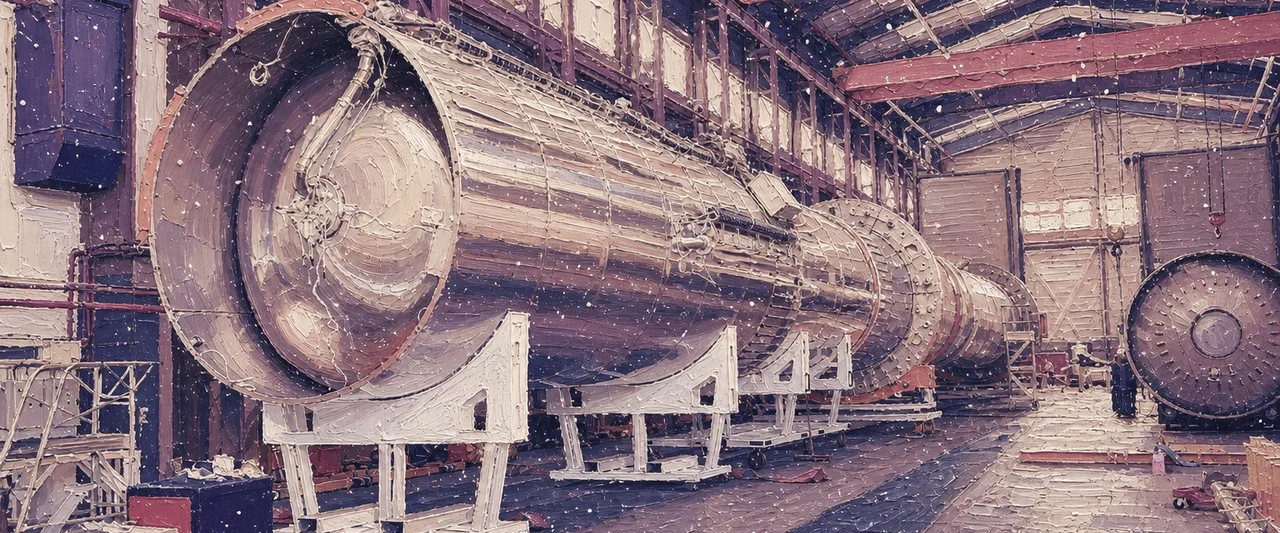
MaiaSpace works from Building A37 on ArianeGroup’s site in the forest of Vernon, Normandy, where ArianeGroup also fires the Prometheus engine on its test stands. The company has an office in Courbevoie near Paris and, since October 2025, a registered site at the former Soyuz pad in Sinnamary, French Guiana, which CNES assigned to MaiaSpace in 2024. A rocket factory of about 12,000 square metres, the MaiaFactory, is being built in Vernon, and Prime Minister Sébastien Lecornu laid its foundation stone on 4 September 2026.
MaiaSpace – A closer look at its history
Prometheus, Themis and a plan for a small reusable rocket (2015 – 2021)
ArianeGroup and the French space agency CNES started work on Prometheus, a low-cost reusable methane engine, in 2015. ESA funded it from December 2017 with a EUR 75 million contract and announced a full-scale ground test for November 2020. The first ignition took place at Vernon in November 2022, two years later.
In December 2020 ESA added Themis, a reusable first-stage demonstrator meant to rise, hover and land, with a EUR 33 million contract and test hops planned from 2023. A second Prometheus contract worth EUR 135 million followed in May 2021, and ArianeGroup then expected a version of the engine to fly on an upgraded Ariane 6 as early as 2025.
On 6 December 2021 economy minister Bruno Le Maire visited Vernon to present the EUR 1.5 billion space part of France 2030, the state’s investment plan. His ministry welcomed ArianeGroup’s new reusable mini-launcher, whose first commercial launch “could take place as early as 2026”. Two weeks later ArianeGroup moved the project into ASL PROJ 1, a dormant shelf company it had registered in Paris in December 2016, renamed it MaiaSpace and moved its seat to Vernon.
A startup inside ArianeGroup (2022 – 2023)
MaiaSpace was registered in Evreux on 4 January 2022 with EUR 500,000 of capital. Its first président was André-Hubert Roussel, then chief executive of ArianeGroup, and Yohann Leroy took over in May 2022. The registered purpose was a semi-reusable rocket able to carry 700 kg to a 700 km sun-synchronous orbit with its first stage recovered.
In June 2022 Leroy said MaiaSpace would raise “several hundred million euros” from private investors over three years, starting in the last quarter of 2022. He added that the company would not seek research money from ESA or France 2030. The first launch was planned for 2026, with three Prometheus engines on the first stage, one on the second, and a first stage derived from Themis.
No outside investor came. ArianeGroup put in EUR 6 million in January 2023 and EUR 27 million in June 2023, and the team grew from about 20 people in 2022 to about 40 in early 2023. In June 2023 the company moved its target forward to a first orbital flight “before the end of 2025”, and Prometheus fired for 12 seconds on the Themis test stage at Vernon the same month. The 2023 accounts show EUR 21.3 million of operating costs against EUR 9,470 of revenue.
Public contracts, a new pad and moving dates (2024 – 2025)
In January 2024 ArianeGroup raised its planned investment in MaiaSpace to EUR 125 million, and in March 2024 it paid in EUR 45 million and took warrants for up to EUR 40 million more. On 26 March 2024 President Emmanuel Macron named MaiaSpace one of four winners of a France 2030 contest, run by CNES, to buy demonstration launches, next to HyPrSpace, Latitude and Sirius Space Services. MaiaSpace promised a demonstration flight before the end of 2027 with 1,500 kg to a 600 km sun-synchronous orbit, and the state did not publish the amount.
In September 2024 CNES gave MaiaSpace the former Soyuz pad at the Guiana Space Centre, and the company put its first launch at the end of 2025. Two months later ESA signed about EUR 230 million of new work on Prometheus and Themis with ArianeGroup and planned a first Themis hop for 2025. CNES also chose ArianeGroup, with MaiaSpace as launch operator, for SkyHopper, a France 2030 project to land a Maia first stage on a barge and fly it again.
The 2024 accounts show EUR 180 million of advances from customers, EUR 176.6 million of cash and a net loss of EUR 24.0 million. In March 2025 MaiaSpace announced its first commercial customer, the French in-space transport company Exotrail. In June 2025 four ministers visited Vernon, and the company called its technical and financial roadmap “in line with expectations” and moved the first flight to the second half of 2026.
In July 2025 ESA picked MaiaSpace as one of five candidates for its European Launcher Challenge, which buys launches from companies that reach orbit by the end of 2027. At ESA’s ministerial council in November 2025 France put EUR 179 million into that programme for MaiaSpace alone. Themis had arrived at Esrange in Sweden in June 2025 and did not hop that year. MaiaSpace closed 2025 with a net loss of EUR 37.5 million and negative equity.
Negative equity, a dropped test flight and a factory (2026)
In January 2026 Eutelsat signed a launch agreement for its OneWeb satellites, ten launches from the second half of 2027 according to AFP. In February the first flight moved to 2027, with a suborbital test first and a first launch “less than five years after the company’s creation i.e., April 2027”. On 25 June 2026 ArianeGroup, as sole shareholder, recorded that equity had fallen below half of the share capital and decided not to dissolve the company, a decision French company law requires in that case.
In July 2026 MaiaSpace dropped the suborbital flight. The first flight is now an orbital attempt in the second half of 2027, and the first stage will not be recovered on it. Loft Orbital (July), the rideshare broker RIDE! (August) and the Japanese radar satellite operator iQPS (September) signed agreements, none with a published value. On 27 August ESA signed launcher challenge contracts with Isar Aerospace, Rocket Factory Augsburg and PLD Space, and said MaiaSpace’s contract was “nearing completion”. In October it was still under negotiation.
On 4 September 2026 Prime Minister Sébastien Lecornu laid the foundation stone of the MaiaFactory in Vernon and said “On joue gros” (“we are playing for high stakes”). At the end of September Themis completed a second fuelling rehearsal at Esrange, again without a hop, and the EU has moved the deadline of its Themis grant to 31 December 2026.
The Maia rocket: what it carries and what it costs
Maia is a two-stage rocket burning methane and liquid oxygen. The first stage has three Prometheus engines and is meant to land on a barge at sea, the second stage has one, and an optional kick stage called Colibri can carry payloads further. The company gives a height of about 50 m and a diameter of 3.5 m, while press reports from January 2026 gave 55 m and 300 tonnes.
| Date | Payload as stated | Stated by |
|---|---|---|
| 2022 | 700 kg to a 700 km sun-synchronous orbit, first stage recovered | Registered company purpose |
| 2023 | 500 kg to sun-synchronous orbit reusable, 1,500 kg expended | MaiaSpace |
| March 2024 | 1,500 kg to a 600 km sun-synchronous orbit (France 2030 demonstration target) | CNES |
| September 2024 | “few hundreds of kilograms to 4 tons into LEO” | MaiaSpace |
| June 2026 | Four-engine version with up to 8 t to low Earth orbit, a concept only | MaiaSpace, via European Spaceflight |
| October 2026 | 500 kg to sun-synchronous orbit reusable, 1.5 t expended, up to 4 t to inclined low Earth orbit with Colibri | ArianeGroup, MaiaSpace |
The core rocket has stayed at 1.5 tonnes to sun-synchronous orbit, expended, since 2023. The 4 tonne figure needs the Colibri stage and a lower, inclined orbit. In April 2026 the CEO said the first rocket would have “a bit less performance” than the target, and that the first landing attempt would come around the eighth or ninth flight, in 2028 or 2029.
AFP quoted a price of about EUR 6,000 per kg in December 2025, and the company compared it to SpaceX’s list price. SpaceX sells rideshare places to sun-synchronous orbit at USD 7,000 per kg in 2026, on Falcon 9, which had flown 690 times and landed 643 boosters by early October 2026.
Investing in MaiaSpace: Funding and Financials
ArianeGroup’s money
MaiaSpace has one shareholder, ArianeGroup Holding, the joint venture of Airbus and Safran that also builds Ariane 6. By the end of 2025 it had paid in EUR 83.4 million of capital and share premium, and it holds warrants for up to EUR 40 million more that were not used by the end of 2025. No outside investor has been announced, and the share capital has not changed since March 2024. The company’s website lists “125 M€ funding secured”, the amount ArianeGroup committed in January 2024.
What the accounts show
| Year | Revenue | Operating costs | Net loss | Equity at year end | Cash at year end |
|---|---|---|---|---|---|
| 2022 | 0.25 | n/a | -3.2 | n/a | n/a |
| 2023 | 0.01 | 21.3 | -20.3 | 14.8 | 17.0 |
| 2024 | 4.8 | 36.1 | -24.0 | 35.8 | 176.6 |
| 2025 | 15.9 | 60.8 | -37.5 | -0.8 | 114.2 |
Net losses from 2022 to 2025 add up to EUR 85.1 million, slightly more than everything ArianeGroup paid in. Operating costs grew from EUR 21.3 million in 2023 to EUR 60.8 million in 2025, of which EUR 20.1 million went on wages and social charges and EUR 32.2 million on outside purchases and services. Research tax credits brought in EUR 5.7 million over the three years.
Ernst & Young audits MaiaSpace and signed clean opinions on the 2021, 2023, 2024 and 2025 accounts. The 2025 report adds a note on a change of accounting method and no warning on going concern. The notes to the 2025 accounts state that a decision on the company’s future would be needed, and ArianeGroup took it in June 2026 by keeping the company alive.
Customer advances
The 2024 balance sheet shows EUR 180 million of advances received from customers, and the 2025 balance sheet EUR 96 million, plus EUR 59.2 million booked as income received in advance. The accounts do not name who paid. MaiaSpace told European Spaceflight the money covers its France 2030 contract and private contracts it did not name. The advances sat in an interest-bearing account and earned EUR 5.1 million in 2024, more than that year’s revenue of EUR 4.8 million, and EUR 3.7 million in 2025. In 2025, EUR 15.5 million of the EUR 15.9 million revenue came from customers in France and was partly booked as work on contracts progressed.
Public money in, promised vs delivered
The French state has not published what it pays MaiaSpace. Here is what we found, split between money for MaiaSpace itself and money for the ArianeGroup engine and test vehicle that Maia is built on:
| Programme | To | Type | Amount | Signed | Promised at the time | Status, October 2026 |
|---|---|---|---|---|---|---|
| ESA Prometheus engine, first contract | ArianeGroup | Development contract | EUR 75 million | 12/2017 | Full-scale ground test in November 2020 | First ignition November 2022 |
| ESA Themis test vehicle | ArianeGroup | Development contract | EUR 33 million | 12/2020 | Test hops from 2023 | No hop |
| ESA Prometheus engine, second contract | ArianeGroup | Development contract | EUR 135 million | 05/2021 | A version on Ariane 6 as early as 2025 | Ground tests at Vernon, no flight |
| ESA Prometheus and Themis extensions | ArianeGroup | Contract riders | about EUR 230 million | 11/2024 | First Themis hop in 2025 | No hop |
| EU SALTO (Horizon Europe) | ArianeGroup | Grant | EUR 39 million | 12/2022 | First Themis hops by November 2025 | Deadline moved to 31 December 2026 |
| France 2030 mini-launch demonstration (CNES) | MaiaSpace | Public purchase with milestones | not published | 03/2024 | Flight before the end of 2027, 1,500 kg to 600 km sun-synchronous orbit | First flight planned for the second half of 2027 |
| France 2030 SkyHopper (CNES) | ArianeGroup, with MaiaSpace as launch operator | Demonstration purchase | not published | 11/2024 | Land and refly a Maia first stage, recovery in 2027 | First landing attempt planned for 2028 – 2029 |
| ESA European Launcher Challenge | MaiaSpace | Launch services paid on milestones | EUR 179 million from France, about EUR 184 million with Germany and Switzerland | pledged 11/2025 | Orbit by the end of 2027 | Contract not signed |
| Guiana Space Centre pads (CNES) | Shared public infrastructure | Public works and pad use | EUR 50 million for the ELM complex, which MaiaSpace left in 2025, and “several tens of millions” for ELM2 | 2022 – 2026 | First flight from the ELM complex | Moved to the former Soyuz pad |
| Région Normandie | MaiaSpace | Regional aid | EUR 3 million | 06/2025 | Factory ready by 2027 | Foundation stone laid in September 2026 |
| Research tax credits | MaiaSpace | Tax credit | EUR 5.7 million | 2023 – 2025 | Booked |
The ESA contracts for the engine and the test vehicle alone come to about EUR 470 million in announced value, before a single hop. Every date on this list that has already arrived was missed. The two contracts that run to the end of 2027 depend on a first flight planned for the second half of 2027.
MaiaSpace against the competition
MaiaSpace wants to compete on reuse and price, so we compare Maia with the rockets that already do what it plans to do, and with its European rivals.
| Rocket | Company | Payload | First orbit | First booster landing |
|---|---|---|---|---|
| Falcon 9 | SpaceX, United States | 22 t to low Earth orbit, expended | June 2010 | December 2015, reflown since March 2017 |
| Zhuque-2 | LandSpace, China | 1.5 t to a 500 km sun-synchronous orbit | July 2023, the first methane rocket in orbit | not reusable |
| Zhuque-3 | LandSpace, China | 21.3 t to low Earth orbit, expended | December 2025 | August 2026 |
| Long March 10B | CASC, China | 16 t to low Earth orbit, reusable | July 2026 | July 2026, caught in a net |
| New Glenn | Blue Origin, United States | heavy lift | January 2025 | November 2025, reflown April 2026 |
| Spectrum | Isar Aerospace, Germany | 700 kg to sun-synchronous orbit | September 2026 | not reusable |
| Vega C | Avio for ESA, Europe | 2.3 t to sun-synchronous orbit | July 2022 | not reusable |
| Maia | MaiaSpace, France | 500 kg to sun-synchronous orbit reusable, 1.5 t expended | planned for the second half of 2027 | planned for 2028 – 2029 |
LandSpace was founded in 2015, the year ArianeGroup and CNES started Prometheus. LandSpace put a methane rocket with Maia’s expendable payload in orbit in July 2023 and landed a booster of its larger Zhuque-3 in August 2026, while Maia’s first flight is planned four years after Zhuque-2’s.
Falcon 9 landed its first booster in December 2015, the same year. NASA paid SpaceX USD 396 million under its COTS programme from 2006 to 2011 for Falcon 9 and the Dragon capsule together, and NASA put the development cost of Falcon 9 at about USD 300 million. ESA’s announced contracts for Prometheus and Themis come to about EUR 470 million, and Themis has not yet hopped.
In Europe, Isar Aerospace reached orbit from Andøya in September 2026, and Vega C has carried satellites to sun-synchronous orbit since 2022. Of ESA’s launcher challengers, Isar has reached orbit, while PLD Space, Rocket Factory Augsburg and MaiaSpace have not.
My opinion on MaiaSpace and why you should keep an eye on them
What I like about MaiaSpace
- Hardware and tests: MaiaSpace builds and tests things. Prometheus has fired many times at Vernon, the full rocket went through a fit-check in 2025, upper-stage prototypes passed cryogenic test campaigns, and the company holds a pad in Kourou. For a company of four years, that is a lot of hardware.
- The right technology: Maia aims at what works elsewhere, a methane engine and a first stage that lands. Europe needs that, and a price of about EUR 6,000 per kg would compete with SpaceX rideshare if it holds.
- Customers: Exotrail, Eutelsat, Loft Orbital, RIDE! and iQPS signed with a company that has not flown. We don’t know the values, but operators are willing to put their names on it.
What I don’t like about MaiaSpace
- The startup label: MaiaSpace calls itself a startup. It is a 100% subsidiary of Europe’s established launch company, set up in a shelf company and funded by its parent and by the state. The private round of several hundred million euros never happened. The promise not to take ESA or France 2030 research money turned into a France 2030 contract and a EUR 179 million ESA pledge within three years. MaiaSpace calls these service contracts rather than research grants, but they come from the same public budgets.
- Dates: The first flight moved from 2026 to the end of 2025, back to 2026, to April 2027 and to the second half of 2027. The upper-stage hot fire was due in 2024, then in 2025, and has not happened. Themis was due to hop in 2023. None of these moved because a flight went wrong, since nothing has flown.
- Money without a price tag: The French state has not published what its France 2030 contract pays. The accounts show EUR 180 million of advances from an unnamed customer and EUR 8.8 million of interest earned on them. Taxpayers can see the pledges at ESA but not the main French contract.
- More than a decade behind on reuse: SpaceX landed its first booster in 2015 and now lands them every few days. China landed or caught two boosters in 2026. Europe’s reusable test vehicle, contracted in 2020, has not left the ground, and Maia’s first landing attempt is planned for 2028 or 2029.
Things to watch out for
- The ESA contract: France pledged EUR 179 million in November 2025, and three rivals signed in August 2026. Watch for the signature, the value, the milestones and whether the rule of orbit by the end of 2027 holds.
- The next tests: The firing of the second upper-stage prototype at Vernon, planned from late 2026, and then the first-stage firing on the pad in Kourou. Either would be the first firing of a Maia stage.
- The 2026 accounts: Due in mid-2027. Watch the loss, whether ArianeGroup uses its EUR 40 million of warrants or adds capital, and how much of the advances is left.
- Themis: The EU grant now ends on 31 December 2026. A hop before then would be the first flight of any hardware in this programme.
MaiaSpace: Jobs and career
MaiaSpace says it has more than 400 employees (September 2026), up from about 20 in 2022. The accounts count close to 220 employees at the end of 2025 and an average of 125 in 2024, while the company’s own figure for November 2025 was more than 330. The main site is Vernon in Normandy, with an office in Courbevoie near Paris and a launch base in French Guiana, and French is useful.
In 2024 MaiaSpace spent about EUR 123,000 per average employee on wages and social charges. About a third of the staff came from established space companies, the company said in February 2025.
Structured company information on MaiaSpace (MaiaSpace SAS)
| Type | Information |
|---|---|
| Official Company Name | MaiaSpace SAS (SIREN 824 528 129, RCS Evreux) |
| Founded in | December 2021, in a shelf company registered in December 2016 (the company gives April 2022) |
| Owner | ArianeGroup Holding SAS (100%) |
| Management | Yohann Leroy (Président and CEO) |
| Auditor | Ernst & Young et Autres |
| Locations | |
| Headquarter | Bâtiment A37 ArianeGroup, Forêt de Vernon, 27200 Vernon, France |
| Office | 32 rue Henri Regnault, Immeuble Watt, 92400 Courbevoie, France |
| Launch Site | Guiana Space Centre, ELM2 (former Soyuz pad), Route de l’Espace, 97315 Sinnamary, French Guiana (first flight planned) |
| Factory | MaiaFactory, Vernon (under construction) |
| Contact | |
| MaiaSpace LinkedIn | |
| Web | maia-space.com |
Updates on MaiaSpace
October 2026: First version of this review, with MaiaSpace’s filed annual accounts from 2021 to 2025, a table of public money against what it promised, the history of first-flight promises and a comparison with SpaceX, Blue Origin, LandSpace, CASC and Isar Aerospace.
If you find incorrect information or want to know more about our sources, feel free to contact us on X or via Email.
Interested in more space companies? Read our other reviews and analysis
Other European launch companies we cover: Isar Aerospace, Rocket Factory Augsburg, PLD Space, HyImpulse, Latitude, Orbex and Skyrora. See also our 2026 ranking of European launch companies and the European Space Map. See Maia next to Europe’s other rockets in European rockets compared, and every first-launch date MaiaSpace has given in European launch dates.
- HyImpulse Technologies
 HyImpulse Technologies builds hybrid paraffin/LOX rockets. SR75-1 flew from Koonibba on 3 May 2024; a UK CAA licence covers SaxaVord for spring 2027. Series A and a Series A Extension above EUR 50 million equity arrived in 2025–26. SL1 targets 600 kg to LEO; HyMOVE is a separate OTV.
 - Andøya Space Center
 Andøya Space Center is a spaceport in northern Norway. Spectrum reached orbit from Andøya on 5 September 2026. Pad 1 is operational and Isar-exclusive; Pad 2 is proposed. Operator Andøya Space AS is 90% Norwegian state and 10% Kongsberg.
 - SkyroraSkyrora is a Scottish new space company developing the Skyrora XL, a three-stage rocket for up to 315 kg to orbit. Our 2026 analysis covers its owners, accounts, public money and launch plans.
- OrbexOrbex (Orbital Express Launch Ltd): UK microlauncher Prime, 180 kg LEO. In administration since 18 February 2026 after GBP 138.5m raised (GBP 76.7m public). Zero launches. Omnidea bought the Forres assets.
- LatitudeLatitude (formerly Venture Orbital Systems) is a French NewSpace company developing a LOX/RP-1 microlauncher (formerly Zephyr). As of October 2026 it has not flown; Series B raised EUR 27 million; an Etlaq Oman LoI targets an experimental late-2027 inaugural that we treat as optimistic. In-depth analysis on moontomars.space.